
How to anodized aluminum
We also produce blades with high thickness and fill, which means 6 meters weigh 30 kilograms. It is not cost-effective for those who work cheaply.
Always try to focus on quality. If we keep reducing the fill and lightening it, it won’t work out.
Our goal is to focus on quality, but this quality issue also depends on the customer. For example, when a customer comes and says I want this exact product with high or low fill, then it’s worth thinking about it.
What does this “khor” material mean?
“Khor” material refers to the punch material that is set in the mold… it’s about the size. If it’s bigger than our computer, it can’t be produced.
Mr. Farzaneh, are you the production manager here or the owner of the factory?
I am a partner with my brother.
And you own the factory as well? Yes.
Over the past few years, since we’ve been mostly working with Arak, we know the factories there well. We started with Kosar because Mr. Rasouli was a friend of mine. After that, we met Mr. Amirabadi and worked with them for a while. We also worked here with the alloy team. So, if anything happens, it’s mostly about, for example, Mr. Rasouli, who is a friend of mine. We had issues over two loads, one time I sent a customer to the factory who bought 7 tons of doors and windows. They haggled over 700 tomans for freight. They sent the load but didn’t pay the 700 tomans. The customer complained to me, saying what kind of factory do you have?
I don’t like such behaviors. For instance, one time I sent a customer who wanted suitcase handles. He said he wanted to do something innovative and produce suitcase handles. He went there for casting, didn’t consider our commission, made the mold, produced it for him, and once again handled the customer in a way that made us promote and work hard, but the customer was dissatisfied due to poor quality or bad customer service.
We build a building and you come and destroy it. Such situations have caused us to cut ties with many factories, despite being friends.
But there are also difficult customers. I had a long talk with that customer over that 700 tomans. He was very firm.
Some people care more about freight than the profile itself. Every customer is sensitive about something. One cares about quality. For example, I had a customer who said, “When I put a 6-meter lammel on the ground, a new bill shouldn’t pass under it.”
I called Mr. Rasouli and told him I had such a customer who wanted 20 tons of load but cared about quality. When he came to our factory, I told him that no factory could produce a 6-meter lammel without a mill or two of error.
I told Mr. Rasouli that this attitude towards the customer is not right, and I didn’t say anything to them at that moment.
Just tell me if you can produce it or not. There’s no need for such behaviors. If someone treats you badly, you won’t work with them anymore.
Pakasimi, for instance, if a customer comes twice, and you say you won’t work with Pakasimi, but then you say send them here to see how good I am, and it makes them angry.
We don’t care about customers; we try to respect everyone who comes. We don’t want to annoy anyone.
Now, Mrs. Jafari introduced us to you. How do you do business with Mrs. Jafari, and how do you work with her? We want to know how you can work with us in the future.
You are dealing with us, and Mrs. Jafari is just an intermediary, one of our employees.
Yes, she is your employee, but if we make a purchase, or have 100 purchases, the goal is that if I introduce Mrs. Jafari to your factory, and she makes 100 purchases, her friend also buys from here, and if we agree in the agreement that if someone buys directly from the factory without going through our intermediary, you should consider the commission percentage we agreed on for us. This is one of the things we wrote in the agreement, and I wanted to know if you have a plan for it, like how you would calculate the commission for someone like Mrs. Jafari who works with you?
Now I will send you the plans and catalogs, and we will agree on the prices.
Your buyers, if we want to work cooperatively, what percentage do they go into order? For example, we have a project now, maybe we took money from the customer a month ago, 50 percent, but they gave it to avoid the price increase. How do you handle this price increase?
If the market is calm like now, last year, profiles were increasing every day, meaning we bought aluminum today, and it became more expensive the next day.
But now, for exactly one year, the market is calm, with a thousand or two thousand tomans increase. If it stays like this, you want one ton of load, we take half the money from you, put it into production, and once produced, you pay and take your load. But if it increases daily, your money doesn’t go to my pocket, it goes to buy raw materials so that when production starts, the production
I mentioned her as an example to ask for myself.
She is our employee (salesperson), so there is nothing for you. You mean you want a sales commission if you bring someone here, right? We have a standard rate for the commission.
We have two types of customers. One buys directly and then comes back to me, saying Engineer Motabarzadeh, sell it to me. Another type likes to buy directly from the factory.
Yes, some say I don’t want to come there, let’s go to the factory directly. You mean that, right?
Yes, such factories need to have one agreement, and the other type another agreement.
We don’t have a problem with that. You say I will buy, and I will also introduce the customer to you.
Yes, exactly.
There’s no problem. The agreement should happen between us. What do you have in mind? If I see that you are indeed a buyer, meaning you take the profile from me, we will write an agreement, saying a percentage of sales. If you sell the profile and introduce the customer to us, we will give you a percentage of the sales. One stage is that you buy the profile from us, and that’s separate.
Yes, the price for that is separate.
We can also give you a percentage of the sales for that.
Do you also have dry ceramics?
Profile?
Runner, for example.
No, we mostly work on lammel and curtain wall. We can make the mold structure at our own cost if we see the consumer is indeed a consumer.
Yes, if such a case arises, do it.
Then we need a complete list of your customer orders, or if you have someone knowledgeable, so we can tell the customer to send us the design and we will calculate it for them?
What does the customer want? You mean give a sample?
No, for example, suppose they want a curtain wall and need a specific profile, like a 20 lammel. Do you have someone to do the calculations for the project?
Calculations for the project, right? Meaning they need profiles and such. We don’t have that, but we can do the drawings. We haven’t done it so far, but we can design the profile and make the mold based on your sample. We do have plans to do this in the future.
That’s more for execution. We don’t get into execution. We only produce. If you need profiles, we produce them. If we get into execution, it would be like stealing your job. We don’t interfere in others’ work. We try to focus on our own production.
We don’t have all the tools for curtain walls, but if you, as an executor, need profiles, you buy from us and the rest from other colleagues. We don’t want to be involved in everything.
Unless the person is too small to handle it. It’s better if you deal directly.
Even these fixers, when they asked for them individually, a 6-meter piece is 200 tomans. When I calculated it individually, it came out to 350 tomans, just for cutting. Cutting alone is 5,000 tomans. It’s very cost-effective, and many wanted it, but it has its own issues. For example, if you cut it, some units might say it’s small or big, or some might say the plastic doesn’t fit, the fitting doesn’t match, and you get caught up in the details. We don’t get into details.
Yes, the goal is to sell 6-meter branches.
We sell profiles by the kilo. We now export, almost 20 to 25 tons of zebra curtain wall profiles to Iraq weekly.
Do you deliver them here or there?
We work in such a way that customs and everything are handled by them.
How much do you sell the profiles per kilo?
The standard and the last time we sold to Iraq was 180,000 tomans, including 50,000 tomans labor cost, which means it’s 130,000 tomans per meter.
How much does it come out in conversion?
Around 150, 155, depending on the cross-section.
These are without paint, right? No, painted with electrostatic and powder coating.
Anodizing is just the labor cost, right? You subtract the labor cost, from 20,000 tomans for silver to more expensive champagne colors.
Even these fixers are in demand. The 6-meter piece costs 200 tomans, but when calculated per piece, it comes out to 350 tomans. Just cutting it costs 5,000 tomans. It’s very cost-effective, and many want it, but it has its own issues. For example, when cut, some units might say it’s too small or too big, or they might say the plastic or fittings don’t match, and you get caught up in the details. We don’t get into such details.
Yes, the goal is to sell 6-meter branches more.
We sell profiles by the kilo. Now we export almost 20 to 25 tons of zebra curtain wall profiles to Iraq weekly.
Do you deliver them here or there?
We work in a way that customs and everything are handled by them.
How much do you sell the profiles per kilo?
The standard and the last time we sold to Iraq was 180,000 tomans, including 50,000 tomans labor cost, meaning it’s 130,000 tomans per meter.
How much does it come out in conversion?
Around 150, 155, depending on the cross-section.
These are without paint, right?
No, painted with electrostatic and powder coating.
Anodizing is just the labor cost, right? You subtract the labor cost, from 20,000 tomans for silver to more expensive champagne colors.
For plating, we work with Mr. Najjar.
Now I will send you the plans and catalogs, and we will agree on the prices.
Your buyers, if we want to work cooperatively, what percentage do they go into order? For example, we have a project now, maybe we took money from the customer a month ago, 50 percent, but they gave it to avoid the price increase. How do you handle this price increase?
If the market is calm like now, last year, profiles were increasing every day, meaning we bought aluminum today, and it became more expensive the next day.
But now, for exactly one year, the market is calm, with a thousand or two thousand tomans increase. If it stays like this, you want one ton of load, we take half the money from you, put it into production, and once produced, you pay and take your load. But if prices increase daily, your money doesn’t go to my pocket; it directly goes to buy raw materials so that when production starts, the production process takes 10 days to complete.
What does it take? For example, find the fittings, find the glass, and so on. My job is to produce.
Do you now have accessories alongside the curtain wall? No, we don’t. For example, you, as an executor, buy the profile from me and the rest from other colleagues because I don’t want to be involved in everything. Because if I want to buy, even the freight I have to pay, the time I spend on it, I will add to it and say it’s in the market, the seller is here, the producer is here, you deal directly, it’s easier.
Unless the person is too small to handle it, it’s better if you deal directly.
Even these fixers are in demand. The 6-meter piece costs 200 tomans, but when calculated per piece, it comes out to 350 tomans. Just cutting it costs 5,000 tomans. It’s very cost-effective, and many want it, but it has its own issues. For example, when cut, some units might say it’s too small or too big, or they might say the plastic or fittings don’t match, and you get caught up in the details. We don’t get into such details.
Yes, the goal is to sell 6-meter branches more.
We sell profiles by the kilo. Now we export almost 20 to 25 tons of zebra curtain wall profiles to Iraq weekly.
Do you deliver them here or there?
We work in a way that customs and everything are handled by them.
How much do you sell the profiles per kilo?
The standard and the last time we sold to Iraq was 180,000 tomans, including 50,000 tomans labor cost, meaning it’s 130,000 tomans per meter.
Around 150, 155, depending on the cross-section.
These are without paint, right?
No, painted with electrostatic and powder coating.
Anodizing is just the labor cost, right? You subtract the labor cost, from 20,000 tomans for silver to more expensive champagne colors.
For plating, we work with Mr. Najjar.
We gradually want to enter the domestic market because our press is getting bigger, and our production is increasing. Now we want to enter the domestic market slowly.
Is this produced with press 5 now? Yes.
Is this mainly used for internal sections like cabinets and such?
Anything you want, the mouth is smaller, the force is less, the 5 cm profile can be produced with this press. The weight of its bolt is less. Now this bolt is 50 kg, that bolt is 20 kg. Production is less, smaller sections can be produced more easily. This press can also produce it, but it’s not cost-effective to use a big press. For example, you can produce a 25 cm profile and take a half-kilo profile; it’s not rational.
Finally, you have customers who want both light and heavy. Ideally, you should have both big and small presses to complement each other.
Thermal and normal, we haven’t entered it yet, but we are producing the new models of building interior and zebra curtains and curtain walls and automatic doors. I think it will come in about ten days.
Do you mean the partitions that separate spaces? Yes.
Do you produce the profiles, or do you plan to produce the partitions? The profiles.
You are an executor, so you also enter these now, and the demand for partitions has increased.
Yes, the demand for partitions has increased.
And the frameless door profile.
Yes, recently, flat units have become popular.
There was a building in Niavaran, 2000 meters flat, a building piece with a few columns in the middle. Then I saw the customer himself came to partition it; there’s no such thing as a wall anymore.
Do you have frameless interior doors?
No, we don’t.
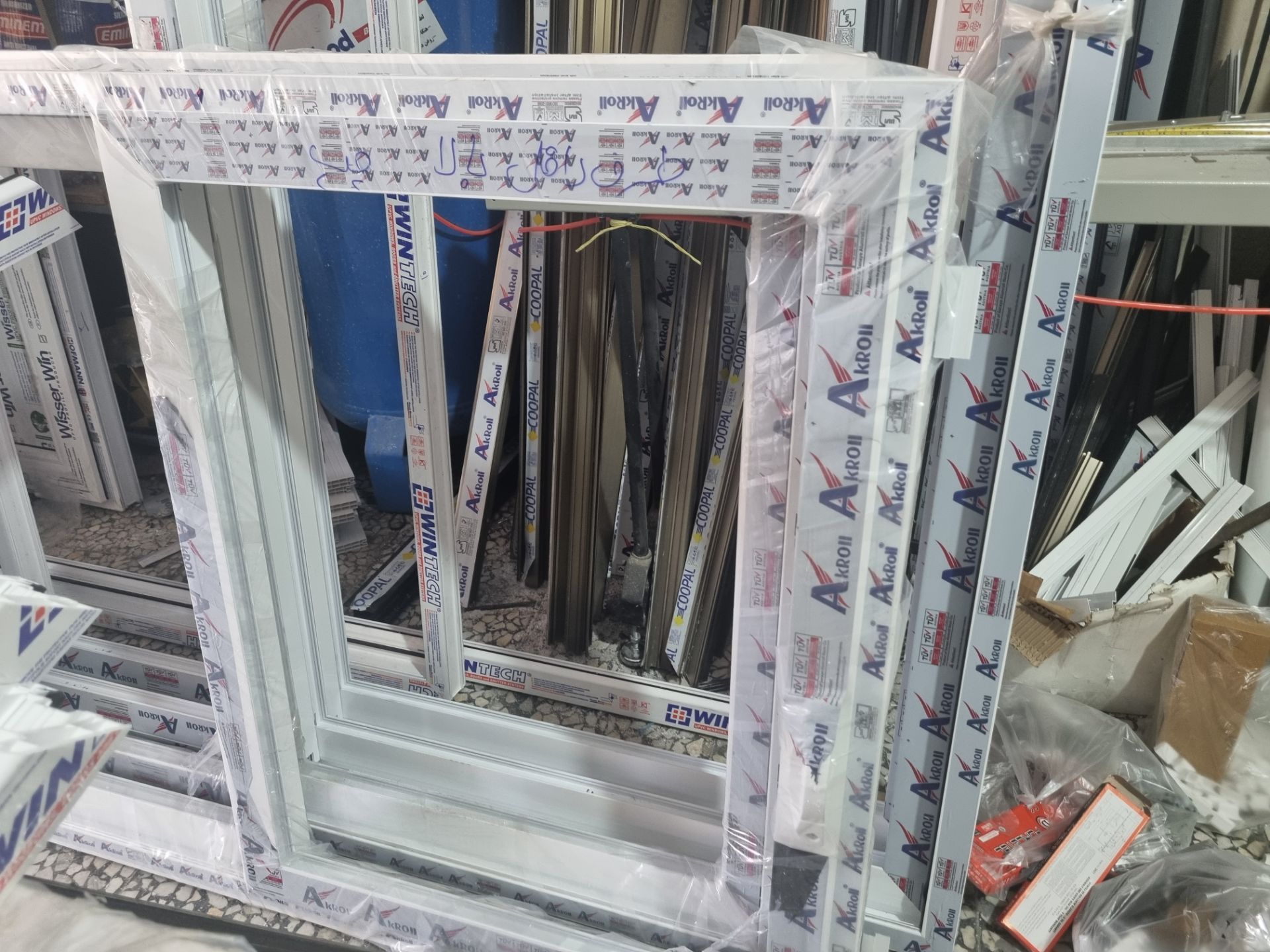
Do you have doors and windows now? Now, doors and windows are entirely in the hands of Akpa. Akpa is very strong in this field.
Yes.
Is this mainly used for internal sections like cabinets and such?
Anything you want, the mouth is smaller, the force is less, the 5 cm profile can be produced with this press. The weight of its bolt is less. Now this bolt is 50 kg, that bolt is 20 kg. Production is less, smaller sections can be produced more easily. This press can also produce it, but it’s not cost-effective to use a big press. For example, you can produce a 25 cm profile and take a half-kilo profile; it’s not rational.
Finally, you have customers who want both light and heavy. Ideally, you should have both big and small presses to complement each other.
Thermal and normal, we haven’t entered it yet, but we are producing the new models of building interior and zebra curtains and curtain walls and automatic doors. I think it will come in about ten days.
Do you mean the partitions that separate spaces?
Yes.
Do you produce the profiles, or do you plan to produce the partitions?
The profiles.
You are an executor, so you also enter these now, and the demand for partitions has increased.
Yes, the demand for partitions has increased.
And the frameless door profile.
Yes, recently, flat units have become popular.
There was a building in Niavaran, 2000 meters flat, a building piece with a few columns in the middle. Then I saw the customer himself came to partition it; there’s no such thing as a wall anymore.
Do you have frameless interior doors?
No, we don’t.
Do you have doors and windows now? Now, doors and windows are entirely in the hands of Akpa. Akpa is very strong in this field.
Akpa has not only quality and branding but also its final price to the customer is always less than other factories. This is strange.
Akpa has unity in sales; it has representatives in all cities, and the price is the same everywhere. They have succeeded in unity and mold making, and every year they release new models and designs. For example, some Akpa profiles we cannot produce.
Can you estimate the cost of mold making for us?
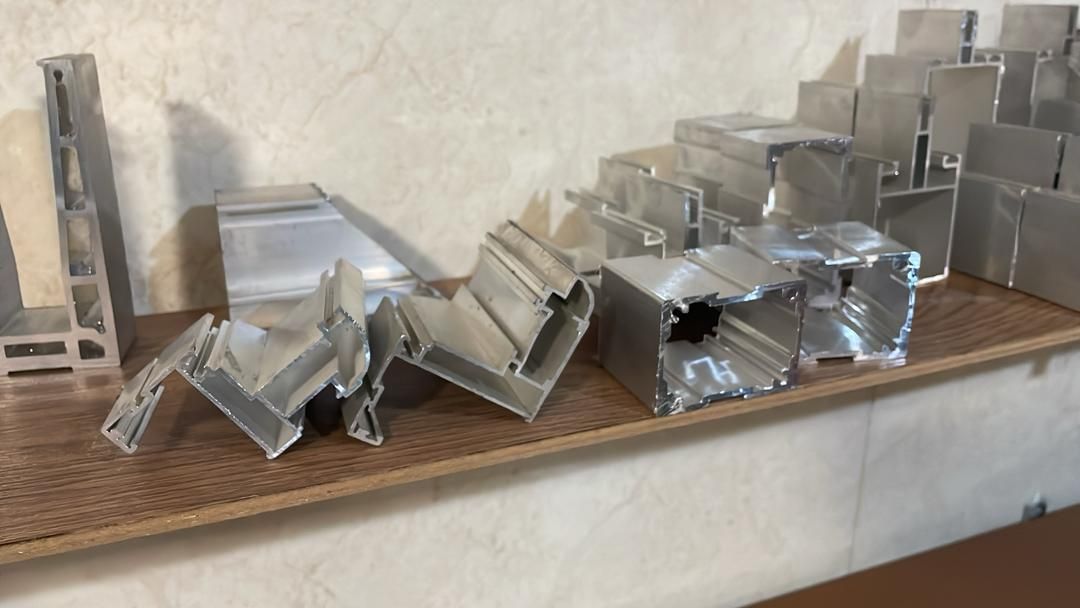
It depends on the section you want, whether it’s large, small, and the diameter. We have steel molds ranging from 20 million to 200 million. The profile section is important. You give the plan, and we give the price. We quote the price, and then you decide whether to produce it or not.
The smallest diameter we produce is 160 mm, and the largest diameter steel mold we produce is 450 mm. The diameter of the steel of the 12 cm profile is 350 mm. The steel is heavy, and the heavier it is, the more material it requires, and it needs more work and becomes more expensive.
If you want, we can also go and see the casting.
The height of our mold machine is 35 cm; it has nothing to do with the mold.
For example, some machines have a height of 25 cm. When the height is less, more pressure is applied to the mold, and it affects the mold.
Do you handle projects as well? Yes, we do, like Mandeli. You give the dimensions, and they tell you how many windows and profiles you need. Currently, we don’t do it, but we are working on it.
It is more for execution. We haven’t gone into execution, and we don’t intend to; execution is your job. We only produce. If you say you need a profile, I produce it. If I get involved in execution, it’s like taking your bread away. Therefore, we try not to interfere in others’ work. Even in mold making, everyone should earn their bread. I don’t interfere in mold making; I try to focus on my own work. If I produce five pieces, the profit is much more than getting into execution, which has its own headaches, like finding fittings and glass. My job is production.

Leave A Comment