
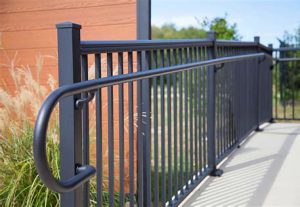
Aluminum handrail
Mr. Mehdi Vafaei is the CEO of Aryanameh Aftab Company, specializing in wood, composite, glass, and loaders. His work resume is here.
Here you talked about windows. Was that what you meant? Yes.
How about the flashing? We have iron flashing above, which we haven’t reached yet. We use iron flashing and do not use composite; he doesn’t like it.
How about pure aluminum? We’ll discuss that later.
These are all interconnected; we see the profit overall.
The window sizes are 160 × 2.
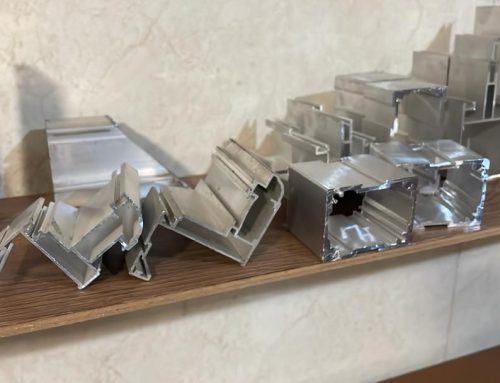
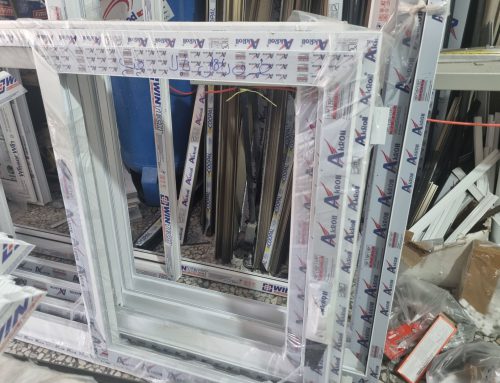
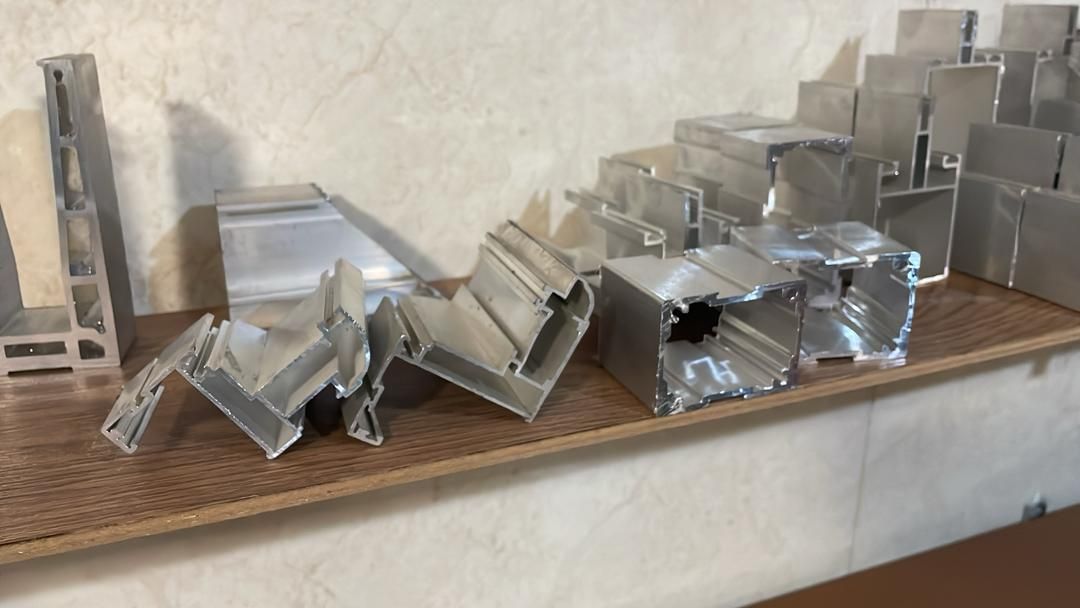
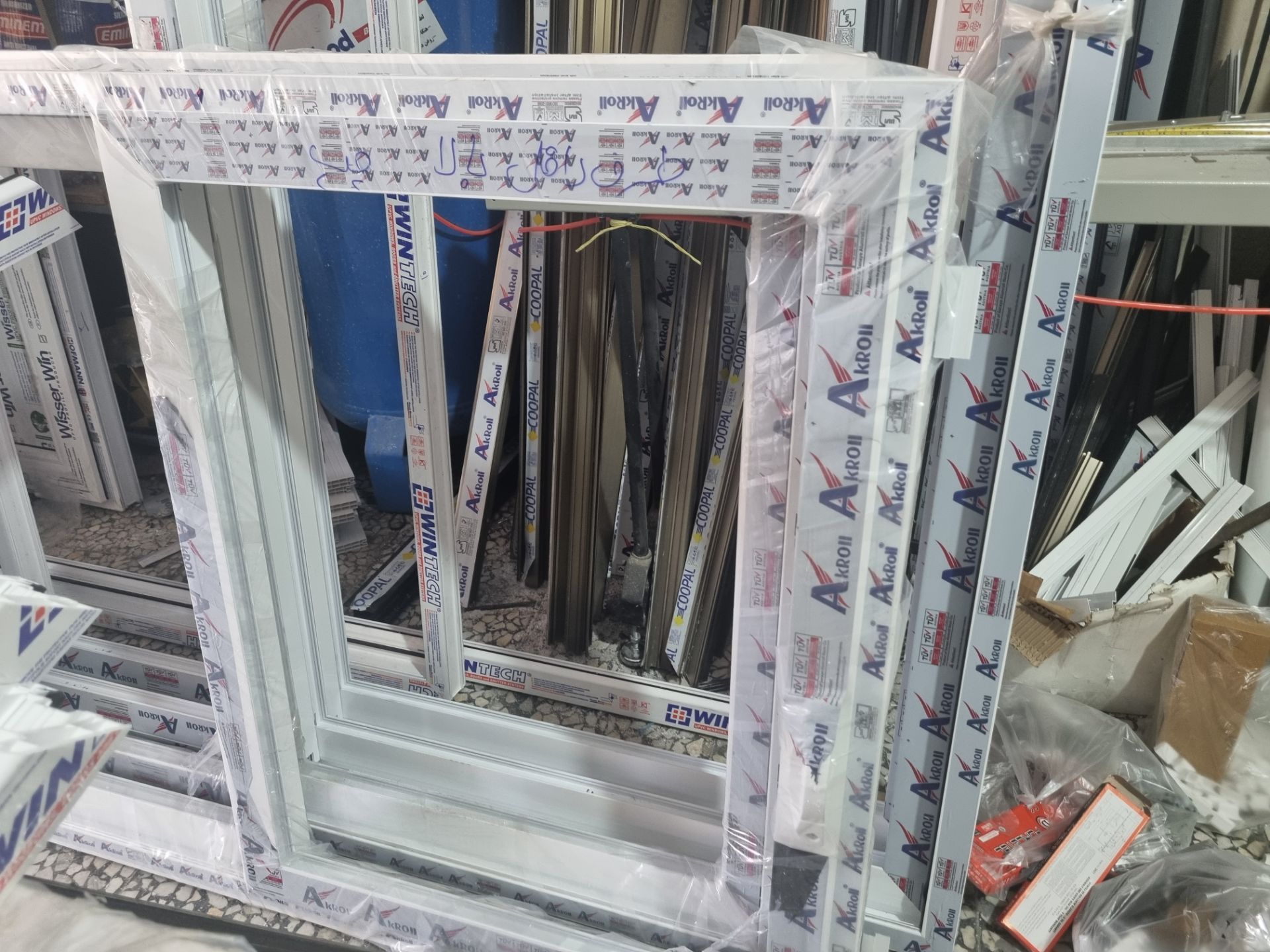
We mostly work with Akpa profiles. Most of our work is with Akpa, but in reality, they don’t differ much. The difference that might benefit you or the end consumer is that it’s enough to work with aluminum. Even if you work with non-standard aluminum, it lasts at least a hundred years here. It’s something that will last even when we are not around, but the aluminum will be. So there’s no need to chase something. I don’t know what your needs are, but if we want to see aluminum windows here, for example, consider a thermal one produced with any profile model. Here it definitely lasts 100 years with no problem. Sometimes you might say I’m looking for price. If it’s about price, in my opinion, the normal ones also work here. There’s no need for thermal.
And even if you use the weakest aluminum, it still has high durability. Now, if you want something (in terms of taste), tell us, and we will make it for you.
Difference between thermal and normal:
Inside the thermal, there is an EPDM rubber which prevents the outside cold from transferring inside, and the normal doesn’t have it, making the profile more compact and reducing costs. The cost difference per square meter of window might be 200 to 250 tomans per square meter.
For example, if a window costs 5 million tomans, it will be 300 tomans cheaper if we use normal.
Regarding hardware, in my opinion, we should use either first-grade Turkish or German Geu hardware. German Geu hardware should have quality so that it doesn’t break in five years. But Geu is the best.
Why don’t you work with the factory next to Akpa? The same factory that produces the hardware itself.
The advantage is that it’s Iranian, and when it finds a defect, you can find and replace that part because it’s Iranian. But with German and Chinese, there is no guarantee that you can find the defective part again.
In terms of hardware, this has been happening to us for years. We used to get English hardware 15 years ago and used it in windows, but we could never find the same chassis again to use. The cost to replace it is not much different from installing new hardware.
We never had supplied hardware. Even Geu sent a series of accordion hardware to Iran. For example, a set cost 80-90 million tomans and was replaceable, but hardware that costs 5 million tomans isn’t worth supplying. For example, if you use Turkish hardware which is cheaper than Geu or use Iranian hardware, it’s much better.
I searched the market and saw the German one, and I couldn’t believe it was German.
Geu is now the best in quality. Turkish quality is not bad either. We’ve been working for about 15-16 years, and during this time, maybe one or two people rarely said that our hardware had this problem. They came, replaced the hardware for 2 million tomans, and took 1 million for labor, so they replaced it for a total of 3 million tomans.
Where is your factory? Shahriar – Kohan
We define a profit in our project. For example, we say we have a 500 million contract, and out of this 500 million, 50 or 100 million is profit. When it becomes 1 billion, we still take the same 50 or 100 million as profit. It doesn’t double as the contract cost increases. That’s why we say when our contract amount goes up, our profit price goes down.
Or for example, these windows you mentioned, even if you give us one window, we make it at its price. We can’t compare it with other windows’ prices.
One drawback of composite is that it has the potential for electrical short and damage.
We don’t have this problem for such a volume.
The fire department says the same; the municipality doesn’t allow much composite; they say use 10-15% composite, not 50-80%.
Composite should be installed horizontally, not vertically, to avoid a chimney effect because when it catches fire from below, it spreads up.
But if it’s horizontal and a spark hits a part of the composite, it doesn’t damage other parts.
The paint on the composite lasts longer than iron.
Regarding iron, even if you use electrostatic paint, moisture causes the sheet to deteriorate.
But this doesn’t happen here.
The works we do are under our three-year warranty. If anything happens, we fix it at our own cost, except for glass breakage.
Where do you get your glass from? Mostly from Ardakan. Sometimes we work with Flot or Adapjan, or Azarjan, depending on which factory can give us the glass at the time. Sometimes Ardakan says I can give you the glass, but I don’t have time for double glazing, so we buy the glass and send it to Adapjan for double glazing, or we send it to another factory if it needs to be tempered.
What are your dimensions? Two floors of 160 by 160 and one floor of 160 by 2.
We can make two types: one with a middle T shape, with a 50-60 cm top, two 80 by 80 on either side, one of which can be openable.
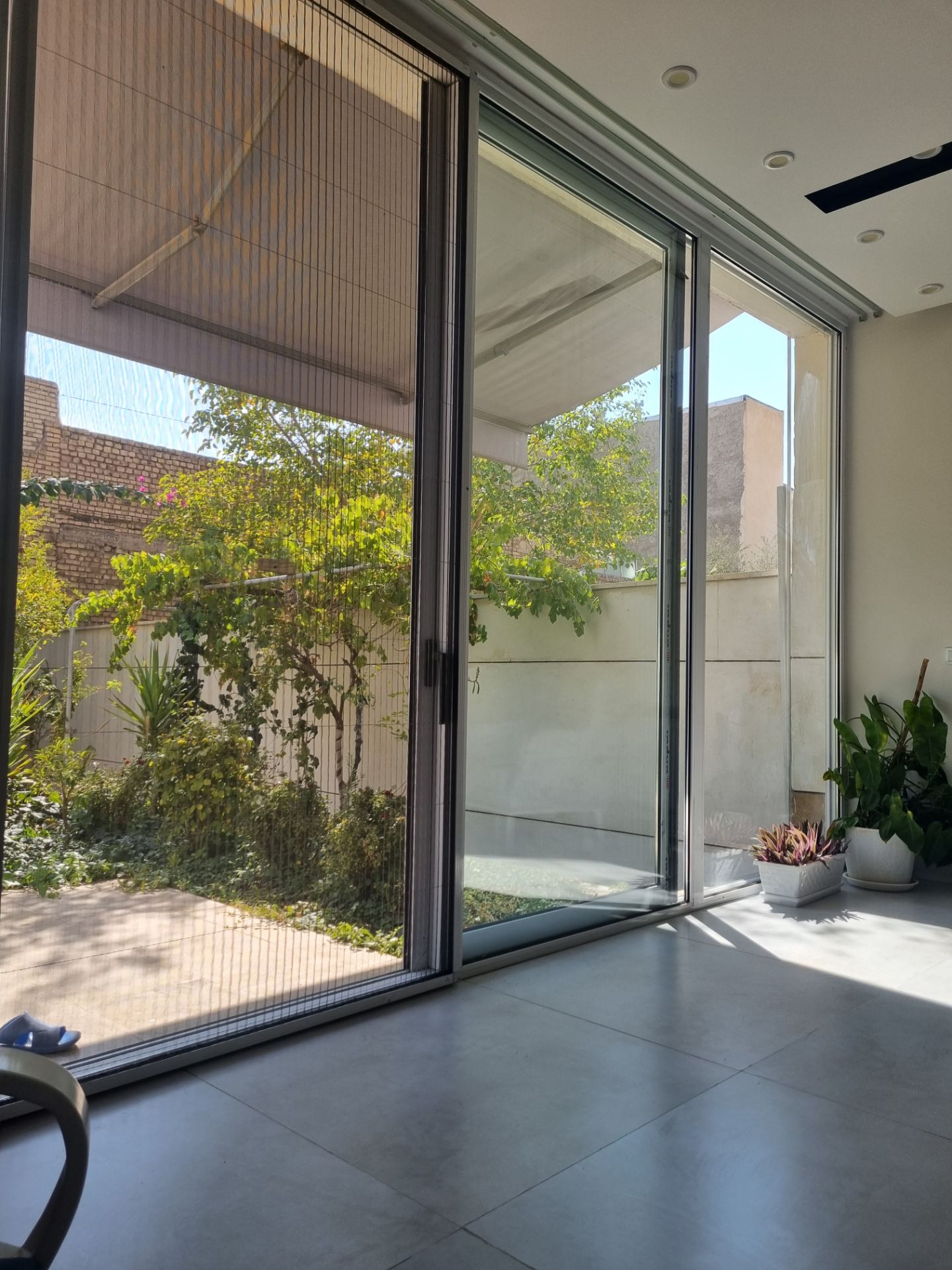
The openable one can be sliding or double-leaf.
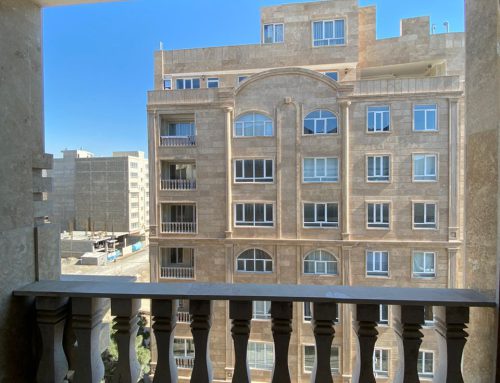
Should it be openable? It must be openable, and the outer ones must have protective guards. The windows must have CNC guards; without guards, the Welfare Organization doesn’t accept it.
What have you defined for the guards? Because the guard is very important for the window’s beauty.
We haven’t defined anything.
For it to look more beautiful, in my opinion, the whole front of the window should have a guard to look more uniform.
If only the window that needs to be opened has a guard, it looks bad from the outside, having one side with a guard and the other without. This causes disorder.
Unless you work with louver guards or use CNC aluminum designs that match the retirement home, but they should also be used elsewhere, not just for the windows.
If we want to put a guard on just one piece of the window, it doesn’t harmonize well. Maybe a corner needs to be CNC worked to help with the façade design.
We have different types of louvers with aluminum: lukki, box, Z types that come on your window louver with a 15 cm or 10 cm gap. These can be adjusted, giving both light and preventing direct sunlight and summer heat from entering, and preventing people from falling out.
Is the one you install fixed? Yes, it’s fixed.
How should the window be cleaned? Give it a 20 cm gap, and you can completely reach the window to clean it. Another thing that can be done is to place the fixed part at the bottom and the openable part at the top so that the openable part is harder to open.
Consider having a fixed part at the bottom, 40/50 cm, and then the window so that if someone wants to open it, they have to use a step ladder. Sliding cleaners are much more expensive than regular ones. The hardware is more expensive, and here the windows aren’t opened often because open windows conflict with our ventilation system; no place should be left open; otherwise, the equipment’s depreciation increases. So there’s no need for sliding, just for cleaning purposes.
You can even use locking handles for the windows.
If you want the 160 cm height in one piece with two 80 cm leaves, you can lock the windows so they don’t open, and the key is with the responsible person, which looks better in my opinion.
If it needs to be like this, your glass 160 by 80 must be tempered, but if it’s 1 meter by 80, it doesn’t need to be tempered.
Electrostatic sandpaper paint doesn’t fade at all.
The quality of non-standard billets is lower than the original, but it doesn’t affect your building. Non-standard ones are produced with waste, while the original is 60% aluminum alloy, which is the best type.
We might have worked over two or three thousand meters of iron flashing, five or six thousand meters of composite, and over a thousand meters of 2 mm aluminum. But in reality, if done correctly, nothing is better than composite because iron rusts, and the welds cause it not to be smooth, but composite doesn’t have these issues, and its paint lasts for 20-30 years without any problem. Its lightness and rust resistance are significant for composite. In my opinion, the priorities are composite, aluminum, and finally, iron.

Leave A Comment