
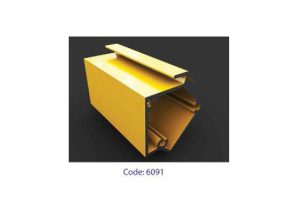
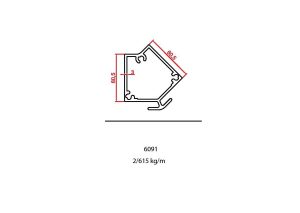
Outside corner piece profile 135 degree
Introduction:
Curtain wall systems play a crucial role in modern architecture, providing structural integrity, energy efficiency, and aesthetic appeal to buildings. Among the various components that make up a curtain wall, the outside corner piece profile is a key element that contributes both functionally and aesthetically. In this article, we will delve into the significance of the 135-degree outside corner piece profile in curtain wall systems, exploring its design, benefits, and applications in contemporary architecture.
Function and Design:
The outside corner piece profile in a curtain wall system serves the vital function of joining two perpendicular curtain wall sections at an exterior angle of 135 degrees. This specific angle is commonly encountered in building designs where facades take on more complex shapes or when architects seek to introduce a distinctive visual element to the structure. The design of the 135-degree outside corner piece is tailored to seamlessly integrate into the overall curtain wall system while maintaining structural stability and weather resistance.
Key Features:
- Precision Fit: The 135-degree outside corner piece profile is engineered with precision to ensure a perfect fit at the intersection of curtain wall sections. This tight fit is essential for maintaining the structural integrity of the entire system and preventing water infiltration.
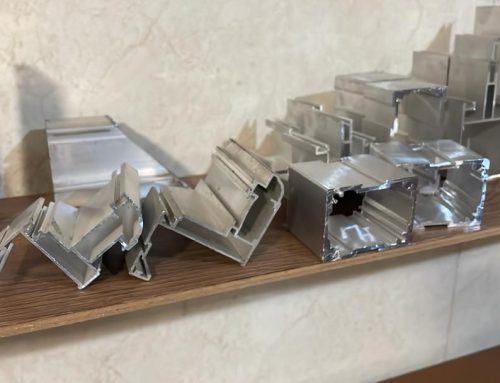
- Material Durability: These corner pieces are typically crafted from durable materials such as aluminum or stainless steel. The chosen material not only provides strength but also ensures resistance to corrosion and other environmental factors, enhancing the longevity of the curtain wall system.
- Thermal Performance: A well-designed 135-degree outside corner piece contributes to the overall thermal performance of the curtain wall system. Proper insulation and thermal breaks within the profile help in maintaining energy efficiency and reducing heat transfer between the interior and exterior of the building.
- Aesthetic Integration: Beyond functionality, the aesthetic integration of the corner piece is crucial. The design often incorporates sleek lines and minimalistic features, aligning with modern architectural trends. This ensures that the corner piece enhances the visual appeal of the building while maintaining a cohesive design language.
Applications:
The 135-degree outside corner piece profile finds applications in a variety of architectural scenarios:
- Unique Building Shapes: Buildings with irregular or non-standard shapes often require the use of 135-degree outside corner pieces to accommodate the design intricacies while preserving the continuity of the curtain wall.
- Architectural Expression: Architects leverage the unique angle of the corner profile to introduce a visual focal point or create a signature design element in the building’s facade. This adds an extra layer of sophistication to the overall aesthetic.
- Commercial and Residential Structures: From commercial skyscrapers to residential complexes, the 135-degree outside corner piece profile is adaptable to diverse architectural styles and scales, making it a versatile choice for a range of projects.
- Seamless Transitions: When buildings feature multiple facades or design variations, the 135-degree outside corner piece profile facilitates seamless transitions between different sections of the curtain wall. This transition is crucial not only for visual continuity but also for maintaining the building’s structural integrity.
- Weather Performance: The corner piece plays a vital role in preventing water infiltration and ensuring the curtain wall system’s resistance to adverse weather conditions. The precise fit and durable materials used in its construction contribute to the overall weather performance of the building envelope.
- Installation Efficiency: The design of the 135-degree outside corner piece is often engineered for ease of installation. Its compatibility with other curtain wall components streamlines the construction process, saving time and resources during the installation phase.
- Maintenance Considerations: The durability of materials used in the corner piece profile minimizes maintenance requirements over the building’s lifecycle. This is particularly important in high-rise structures where accessibility for maintenance may be challenging.
- Customization Possibilities: Architects and designers appreciate the customization possibilities that the 135-degree outside corner piece profile offers. Whether it’s color, finish, or additional design features, customization allows for tailored solutions that align with the overall design intent of the building.
- Future Trends and Innovations: As the field of architecture continues to evolve, it is likely that the design and functionality of the 135-degree outside corner piece profile will see further refinements. Innovations may focus on advancements in materials, incorporating sustainable options, or integrating smart technologies to enhance the performance and efficiency of curtain wall systems.
- Sustainability Considerations: With an increasing emphasis on sustainable construction practices, the 135-degree outside corner piece profile is expected to align with eco-friendly initiatives. This could involve the use of recyclable materials, energy-efficient design features, and a commitment to reducing the environmental impact of building components.
- Integration with Building Information Modeling (BIM): The use of Building Information Modeling (BIM) in construction projects is becoming more prevalent. The 135-degree outside corner piece profile, as a critical element of the curtain wall system, is likely to see increased integration with BIM tools. This integration enhances collaboration, accuracy in design, and overall project efficiency.
- International Standards and Regulations: As the global construction industry becomes more interconnected, adherence to international standards and regulations becomes paramount. Manufacturers and designers of the 135-degree outside corner piece will need to stay abreast of evolving standards to ensure that their products meet the requirements of different regions and markets.
- Collaboration in Design and Construction: The complexity of modern architectural designs often requires collaboration among various stakeholders, including architects, engineers, and manufacturers. The 135-degree outside corner piece profile serves as a focal point for such collaboration, requiring seamless coordination to ensure that it meets both aesthetic and technical specifications.
Challenges and Opportunities: Despite its numerous advantages, the 135-degree outside corner piece profile may present challenges in certain design scenarios. Architects and manufacturers will need to address these challenges creatively, turning them into opportunities for innovation and pushing the boundaries of what can be achieved in curtain wall systems.
- Case Studies and Success Stories: Examining real-world case studies and success stories involving the use of the 135-degree outside corner piece profile can provide valuable insights into its application and impact. From iconic skyscrapers to innovative residential projects, these examples showcase the versatility and adaptability of the corner piece in diverse architectural contexts.
- User Feedback and Adaptation: Feedback from architects, builders, and end-users who have experience with the 135-degree outside corner piece profile can offer valuable information for further refinement. Understanding how the component performs in different climates, architectural styles, and construction methods can lead to continuous improvement and adaptation.
- Educational Initiatives: Educational initiatives focused on the integration of curtain wall systems, including the 135-degree outside corner piece, can play a crucial role in fostering innovation. Workshops, seminars, and educational resources can contribute to a deeper understanding of the component’s capabilities and encourage aspiring architects to explore creative possibilities.
- Global Impact: Consideration of the global impact of the 135-degree outside corner piece involves understanding its role in various cultural and climatic contexts. Architects and manufacturers may need to tailor designs to suit specific regional needs, taking into account factors such as extreme weather conditions, seismic considerations, and local building regulations.
- The Collaborative Future of Architecture: Looking forward, the collaborative nature of architecture is likely to become even more pronounced. Architects, engineers, manufacturers, and other stakeholders will need to work together seamlessly to address the challenges and opportunities presented by complex designs and evolving construction technologies. The 135-degree outside corner piece profile serves as a microcosm of this collaboration, requiring expertise from multiple disciplines for successful implementation.
- Looking Ahead: The future of the 135-degree outside corner piece profile is promising, as architects and manufacturers explore new frontiers in design and construction. As technology advances, materials evolve, and sustainability becomes increasingly critical, the corner piece will likely undergo further refinements to meet the ever-growing demands of the industry. Architects may push the boundaries of design, experimenting with more intricate shapes and configurations, and manufacturers may respond with innovative solutions that enhance both form and function.
- Digital Twins and Simulation: The integration of digital twins and advanced simulation technologies into the design and construction process is a trend that is likely to impact the 135-degree outside corner piece profile. Architects can leverage these tools to simulate the behavior of the corner piece in different conditions, ensuring optimal performance and efficiency. This level of digital modeling can lead to more accurate predictions and better-informed design decisions.
- Regulatory Changes and Standards: Ongoing changes in building codes, environmental regulations, and industry standards will continue to influence the design and use of the 135-degree outside corner piece profile. Staying abreast of these changes is crucial for architects and manufacturers to ensure compliance and to contribute to the creation of safer, more sustainable, and resilient structures.
- Crisis Response and Resilience: The role of the 135-degree outside corner piece profile in enhancing the resilience of buildings against natural disasters and unforeseen events cannot be overstated. Architects and manufacturers may increasingly focus on developing solutions that enhance the structural robustness and safety features of the corner piece, contributing to the overall resilience of the curtain wall system.
- Continued Collaboration: Collaboration across disciplines will remain a cornerstone in the evolution of the 135-degree outside corner piece. Architects, engineers, material scientists, and manufacturers will continue to collaborate closely to address challenges, share insights, and foster innovation. This collaborative spirit is essential for developing holistic solutions that balance aesthetic aspirations with functional requirements.
- Inclusive and Sustainable Design: The global shift towards sustainable and inclusive design practices will likely influence the development of the 135-degree outside corner piece profile. Architects may increasingly explore eco-friendly materials, energy-efficient designs, and inclusive features that consider the diverse needs of building occupants while contributing to a more sustainable built environment.
Final Thoughts: In conclusion, the 135-degree outside corner piece profile in curtain wall systems embodies the essence of modern architecture—innovation, functionality, and aesthetics converging to create structures that inspire and endure. As we anticipate the future of this integral component, it is evident that its journey is intricately linked to the broader trajectory of architectural evolution. The 135-degree outside corner piece will not merely adapt to change but will play an active role in shaping the future skyline, contributing to the tapestry of human ingenuity and creativity in the built environment.
The story of the 135-degree outside corner piece is ongoing—a narrative written in steel, aluminum, and glass, reflecting the collaborative spirit of the architects, engineers, and manufacturers who strive to build a better, more resilient, and aesthetically pleasing world.

Leave A Comment