
Curtain wall section profile
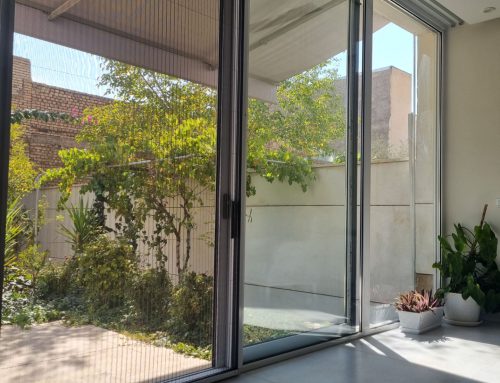
A curtain wall is an exterior building envelope that separates the interior and exterior environments of a building while allowing natural light to enter. Curtain walls are typically made of aluminum frames and glass panels, but other materials such as steel, stone, and brick can also be used. The section profile of a curtain wall is an important consideration in the design and construction of a building because it affects its performance, durability, and aesthetics.
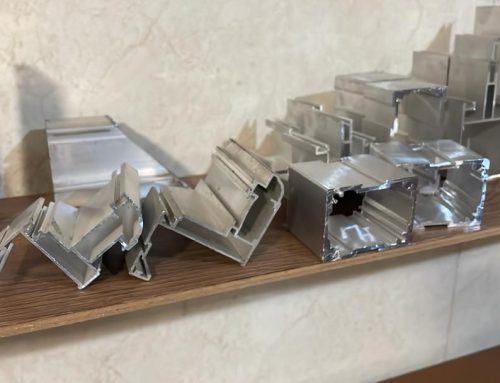
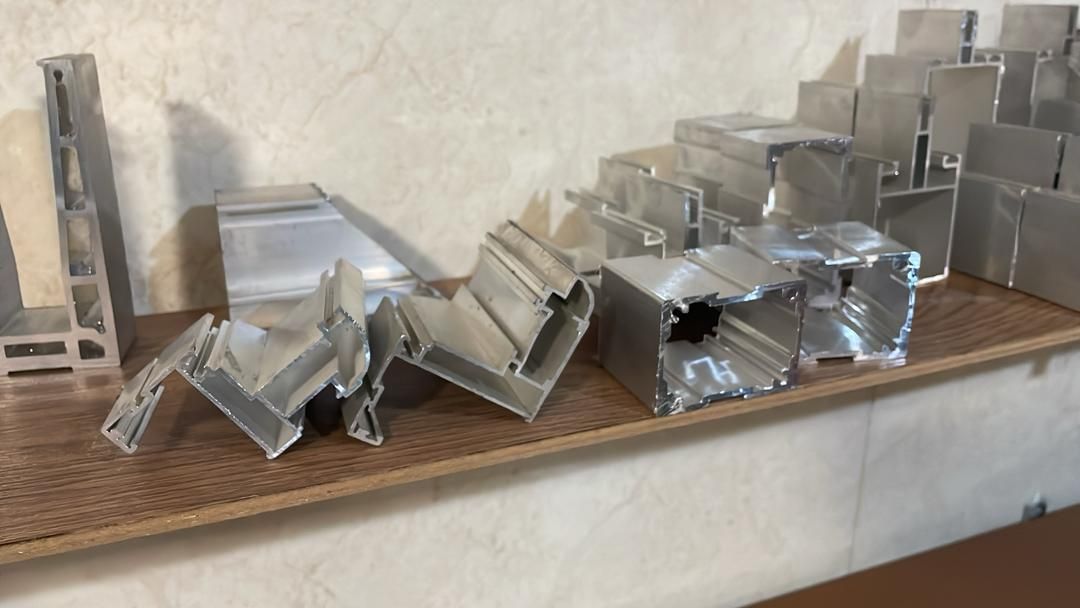
The section profile of a curtain wall is the cross-sectional shape of its components, including the frame, glazing, insulation, and other materials that make up the wall system. The profile determines the strength and stiffness of the wall, as well as its ability to resist wind loads, water infiltration, and thermal bridging. The profile also affects the visual appearance of the wall, including its depth, shadow lines, and overall aesthetics.
The most common section profile for a curtain wall is the stick system, which consists of individual aluminum or steel frames, called mullions and transoms, that are connected together on site to form a grid. The frames are typically rectangular or square in shape and have a depth of 4 to 12 inches. The depth of the frame depends on the height of the building, the wind loads, and the desired aesthetic effect.
The mullions are the vertical members of the grid, and the transoms are the horizontal members that span between the mullions. The glazing panels are inserted into the frames and secured with gaskets or silicone sealant. The insulation is placed between the frame and the glazing to provide thermal performance and to prevent condensation.
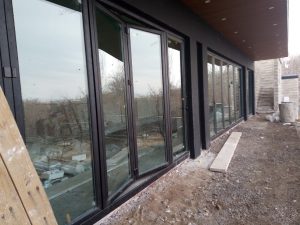
The section profile of a stick system curtain wall can be customized to achieve a variety of aesthetic effects. For example, the mullions and transoms can be shaped to create a curved or angled appearance. The frames can also be finished with a variety of coatings or cladding materials, such as anodized aluminum, painted aluminum, stainless steel, or stone.
Another type of section profile for a curtain wall is the unitized system, which consists of pre-fabricated wall panels that are assembled in a factory and shipped to the construction site. The panels are typically 4 to 6 feet wide and 8 to 12 feet tall and contain all of the components of the wall system, including the frame, glazing, insulation, and air and moisture barriers.
The unitized system has several advantages over the stick system, including faster installation, better quality control, and improved thermal performance. Because the panels are pre-fabricated, they can be tested in a factory environment for air and water infiltration and thermal performance. The panels are also installed with a gasket or silicone sealant that provides a continuous seal around the perimeter of the panel, which reduces the potential for air and water infiltration.
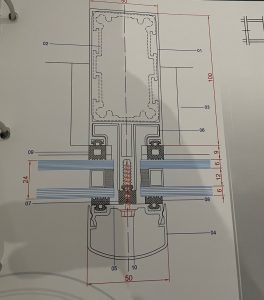
The section profile of a unitized system can also be customized to achieve a variety of aesthetic effects. The panels can be finished with a variety of coatings or cladding materials, such as glass, stone, or metal panels. The panels can also be shaped or curved to create a unique appearance.
A third type of section profile for a curtain wall is the structural glazing system, which uses silicone adhesive to attach the glazing panels directly to the frame. The system is typically used for buildings that require a high degree of transparency, such as atriums, lobbies, or museums.
The structural glazing system has several advantages over the stick and unitized systems, including improved transparency, reduced frame size, and improved thermal performance. Because the glazing panels are attached directly to the frame with silicone adhesive, there is no need for mullions and transoms, which reduces the visual obstruction and improves transparency. The system also reduces the potential for thermal bridging because the frame size is reduced.
The section profile of a curtain wall system can also include other components, such as louvers, sunshades, and fins. These components can provide shading and reduce solar heat gain, while also enhancing the visual appearance of the wall.
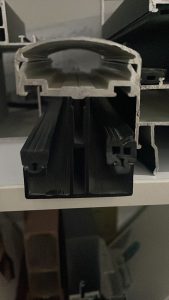
Louvers are horizontal or vertical slats that are inserted into the frame to provide shading and ventilation. Sunshades are fixed or adjustable horizontal projections that extend beyond the plane of the wall to provide shading. Fins are vertical or horizontal elements that are attached to the frame and extend beyond the glazing to provide shading and enhance the visual appearance of the wall.
The section profile of a curtain wall is also influenced by the building code and standards that regulate its design and construction. For example, the International Building Code requires curtain walls to be tested for air and water infiltration, as well as structural performance, to ensure their safety and durability. The American Architectural Manufacturers Association (AAMA) and the National Fenestration Rating Council (NFRC) have also established standards for the performance of curtain walls, including their thermal performance, sound insulation, and impact resistance.
In conclusion, the section profile of a curtain wall is an important consideration in the design and construction of a building. The profile affects the strength, stiffness, and performance of the wall system, as well as its visual appearance. The most common types of section profiles for curtain walls are the stick, unitized, and structural glazing systems, each of which has its advantages and disadvantages. The section profile of a curtain wall can also include other components, such as louvers, sunshades, and fins, that provide shading and enhance the visual appearance of the wall. Finally, the section profile of a curtain wall is influenced by building codes and standards that regulate its design and construction, to ensure its safety and durability.
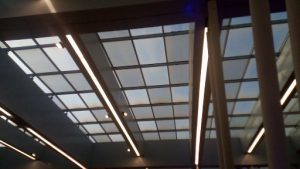
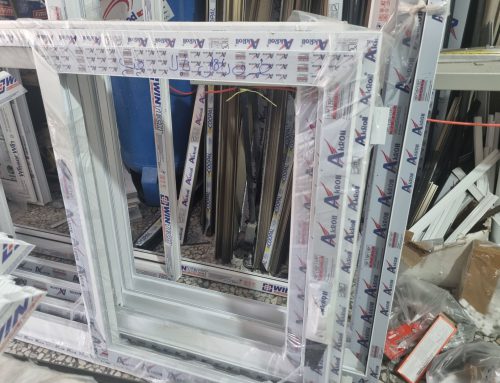
The choice of materials for the curtain wall section profile is also an important consideration. Aluminum is the most common material for the frames of curtain walls because of its strength, durability, and ease of fabrication. Steel is also used for high-rise buildings that require greater structural strength. Other materials, such as stone, brick, or glass, can be used to provide a unique visual appearance or to meet specific performance requirements.
The glazing panels used in curtain walls are also critical to the performance of the wall system. The choice of glazing should consider factors such as solar heat gain, thermal insulation, and acoustic insulation. The most common types of glazing used in curtain walls are insulated glass units (IGUs), which consist of two or more glass panes separated by a spacer and filled with a gas to improve insulation performance.
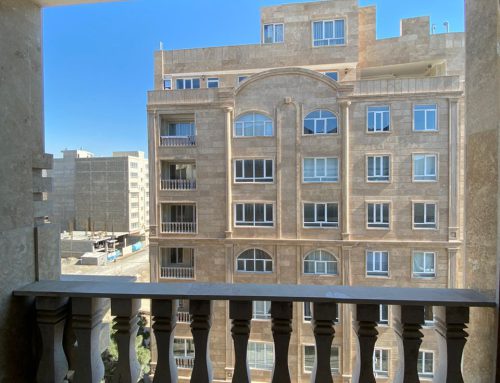
In addition to its functional requirements, the section profile of a curtain wall can also play an important role in the aesthetic design of a building. The depth of the frame and the shape of the mullions and transoms can be used to create a unique visual effect, such as a textured or patterned appearance. The choice of colors and finishes for the frame and the glazing can also be used to enhance the visual impact of the wall.
Conclusion
In conclusion, the section profile of a curtain wall is a critical element in the design and construction of a building. The section profile affects the performance and durability of the wall system, as well as its visual appearance. The choice of materials, glazing, and other components should be carefully considered to meet the functional and aesthetic requirements of the building. By optimizing the section profile of a curtain wall, architects and builders can create buildings that are both functional and visually appealing.

Leave A Comment